JERSEY VALLEYS,
NEPAL
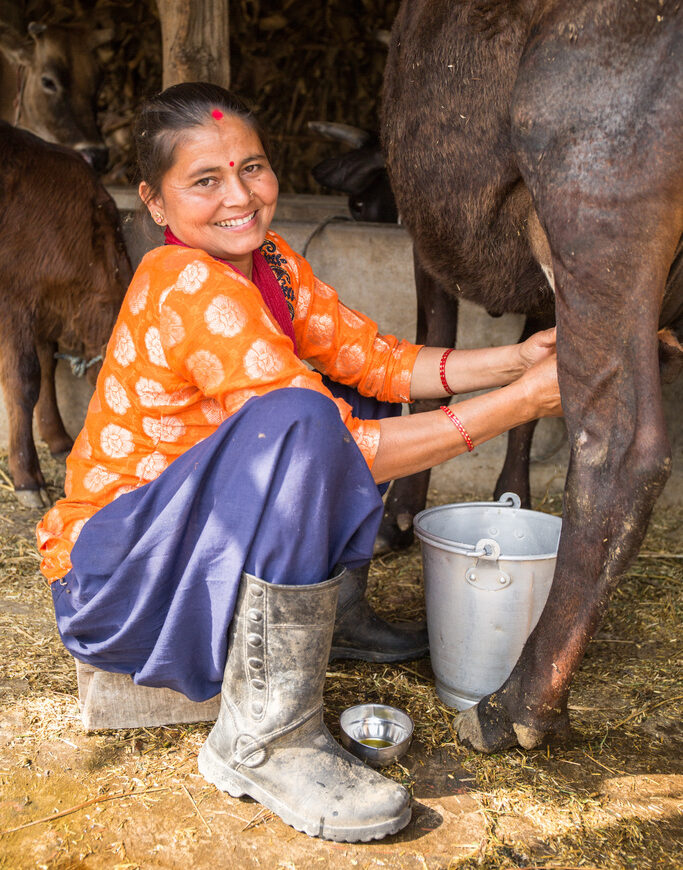
The Jersey Valleys Nepal project aims to increase dairy farmers’ income and resilience. Smallholder farmers receive training in climate-smart dairy practices to increase milk production, business management, and benefit from new Jersey breeding units.
LOCATION
Gandaki Province (region Kaski,
Tanahu, en Nawalparasi)
TIMELINE
2025-2028
THEMES
Women empowerment, dairy, income , climate.
Fostering resilience through sustainable dairy development
The dairy sector is crucial for Nepal’s economy, employing half the population, reducing poverty, and empowering women. But milk demand is outpacing supply, as local cattle breeds produce too little. Smallholder farmers and cooperatives see the need for a Jersey nucleus herd: Jersey cows adapt well to local conditions, give more high quality milk and require less water and feed. With proper breeding, they can help close the gap in Nepal’s dairy production.
The dairy sector, built on young cooperatives, provides millions of families with income and thrives local development. However, these cooperatives need support to strengthen services to their members and grow into strong market players. At the same time, risks such as floods, droughts, and deforestation, while methane emissions and poor manure management add to environmental pressure. Women perform 70% of livestock tasks but are often excluded from leadership and decision-making. Recognizing both the challenges and opportunities, the Government of Nepal identified milk as a strategic agricultural value chain, to achieve food security and economic growth.
Target
The Jersey Valleys Nepal project aims to increase dairy farmers’ income and resilience. Smallholder farmers receive training in climate-smart dairy practices to increase milk production, business management, and benefit from new Jersey breeding units. Besides that the project improves access to finance and supply contracts, while strengthening dairy cooperatives to advocate for farmers rights at policy level.
Results
- Smallholder dairy farmers have increased the productivity of their animals with improved milk quality.
- Effective local value chains and markets are developed, with a strengthened role for smallholder farmers and cooperatives.
Target group
Directly 6,100 people, including smallholder farmers, farmer association representatives, dairy private sector actors, and government officials. Through their households and wider sector improvements, over 49,000 people are expected to benefit in total.